Buy przewodnikwroclaw.eu ?
We are moving the project
przewodnikwroclaw.eu .
Are you interested in purchasing the domain
przewodnikwroclaw.eu ?
domain@kv-gmbh.de · 0541-91531010
Buy przewodnikwroclaw.eu ?
Does the box tree moth cause the boxwood to sprout again?
No, the box tree moth does not cause the boxwood to sprout again. The box tree moth is a pest that feeds on boxwood leaves, which can weaken the plant and make it more susceptible to other stressors. However, the plant's ability to sprout again after damage is a natural response to pruning or environmental stress, not directly caused by the box tree moth. Proper care and management practices can help boxwood recover from damage caused by pests like the box tree moth. **
Can food be preserved in wax?
Yes, food can be preserved in wax. This method of preservation involves coating the food item in a layer of wax, which helps to protect it from air and moisture, thereby extending its shelf life. Common examples of foods preserved in wax include cheese, fruits, and vegetables. However, it is important to note that not all foods are suitable for wax preservation, and proper techniques must be followed to ensure the safety and quality of the preserved food. **
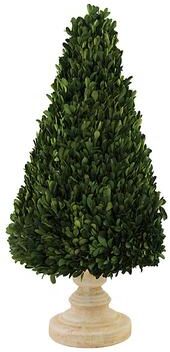
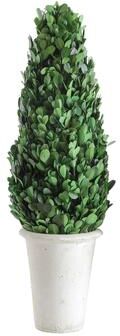
Similar search terms for Preserved-Boxwood-Cone-Tree
Top-Angebote
Products related to Preserved-Boxwood-Cone-Tree:
-
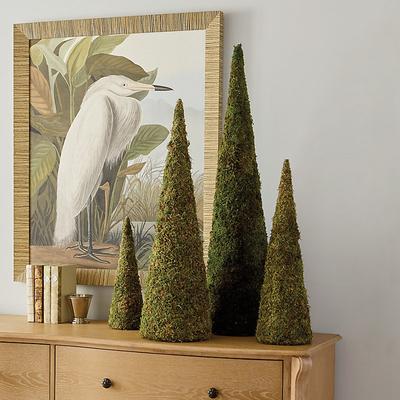
"Preserved Moss Cone Tree - 32"" x 10"" - Ballard Designs"Natural greenery perfect for the holidays and all year-round. These statuesque cone trees are handmade of real moss specially preserved to keep its deep green color and soft texture. The classic cone silhouette is shaped from metal wire and light...43,20 $*Shipping: 179,00 $Secure redirect to the provider
-
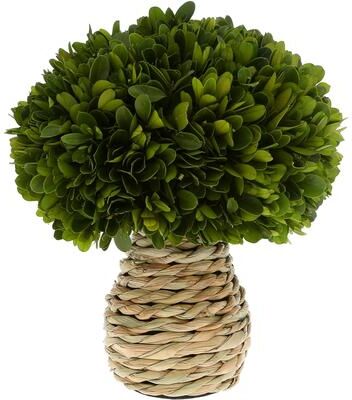
Preserved Boxwood Sphere - Ballard DesignsForever-green color and natural texture to fill your bowls and vases. This lush preserved boxwood sphere is handmade of real boxwood that's been specially treated to retain its deep green color and soft texture. Preserved Boxwood Sphere...23,20 $*Shipping: 6,95 $Secure redirect to the provider


-
Why doesn't the boxwood grow?
The boxwood may not be growing due to various reasons such as inadequate sunlight, poor soil quality, lack of nutrients, overwatering, or pests/diseases. Boxwoods require well-draining soil, sufficient sunlight, and regular watering to thrive. It is important to assess the growing conditions and address any issues to promote healthy growth in boxwood plants. **
-
Have you eaten boxwood leaves?
No, I have not eaten boxwood leaves. Boxwood leaves are not typically consumed as they can be toxic to humans and animals if ingested. It's important to be cautious with plants and ensure that they are safe for consumption before consuming them. If you have any concerns about a specific plant, it's best to consult with a knowledgeable source or expert before consuming it. **
-
What does our boxwood have?
Our boxwood has dense, evergreen foliage that provides year-round interest in the garden. It also has small, inconspicuous flowers that bloom in the spring. Additionally, our boxwood has a compact, rounded growth habit that makes it a versatile plant for use in hedges, borders, or as a specimen plant. **
-
Can the boxwood be pruned?
Yes, boxwood can be pruned. In fact, regular pruning is often necessary to maintain the desired shape and size of the plant. Boxwood can be pruned at any time of the year, but it is best to avoid heavy pruning during the hottest part of the summer. When pruning, it is important to use sharp, clean tools and to avoid cutting into old wood, as this can lead to unsightly bare patches. Overall, proper pruning can help promote healthy growth and maintain the appearance of the boxwood plant. **

How are food products preserved with ethanol?
Food products can be preserved with ethanol through a process called fermentation. In this process, microorganisms such as yeast or bacteria break down sugars in the food and produce ethanol as a byproduct. The ethanol acts as a preservative by inhibiting the growth of spoilage microorganisms. Additionally, ethanol can be used as a solvent to extract flavors and preserve food products such as vanilla extract or herbal tinctures. Overall, ethanol is a versatile and effective method for preserving food products. **
What is a disease on boxwood?
Boxwood blight is a common disease that affects boxwood plants. It is caused by a fungus called Calonectria pseudonaviculata. Symptoms of boxwood blight include dark spots on leaves, black streaks on stems, and defoliation. This disease can spread quickly and is often difficult to control, making it important to promptly identify and treat infected plants. **
Top-Angebote
Products related to Preserved-Boxwood-Cone-Tree:
-
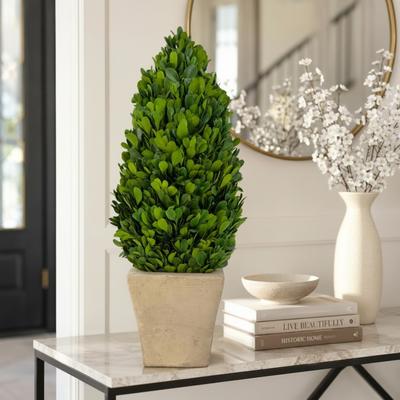
"Preserved Boxwood Cone Tree - 20"" - Ballard Designs""Our Preserved Boxwood Cone Tree is an instant Ballard classic. The classic cone shape is hand crafted of real boxwood specially preserved to keep its deep, emerald-green color and soft texture. The lush cone tree is ""planted"" in a classically..."79,20 $*Shipping: 16,95 $Secure redirect to the provider
-
"Preserved Moss Cone Tree - 32"" x 10"" - Ballard Designs"Natural greenery perfect for the holidays and all year-round. These statuesque cone trees are handmade of real moss specially preserved to keep its deep green color and soft texture. The classic cone silhouette is shaped from metal wire and light...43,20 $*Shipping: 179,00 $Secure redirect to the provider
-
Does the box tree moth cause the boxwood to sprout again?
No, the box tree moth does not cause the boxwood to sprout again. The box tree moth is a pest that feeds on boxwood leaves, which can weaken the plant and make it more susceptible to other stressors. However, the plant's ability to sprout again after damage is a natural response to pruning or environmental stress, not directly caused by the box tree moth. Proper care and management practices can help boxwood recover from damage caused by pests like the box tree moth. **
-
Can food be preserved in wax?
Yes, food can be preserved in wax. This method of preservation involves coating the food item in a layer of wax, which helps to protect it from air and moisture, thereby extending its shelf life. Common examples of foods preserved in wax include cheese, fruits, and vegetables. However, it is important to note that not all foods are suitable for wax preservation, and proper techniques must be followed to ensure the safety and quality of the preserved food. **
-
Why doesn't the boxwood grow?
The boxwood may not be growing due to various reasons such as inadequate sunlight, poor soil quality, lack of nutrients, overwatering, or pests/diseases. Boxwoods require well-draining soil, sufficient sunlight, and regular watering to thrive. It is important to assess the growing conditions and address any issues to promote healthy growth in boxwood plants. **
-
Have you eaten boxwood leaves?
No, I have not eaten boxwood leaves. Boxwood leaves are not typically consumed as they can be toxic to humans and animals if ingested. It's important to be cautious with plants and ensure that they are safe for consumption before consuming them. If you have any concerns about a specific plant, it's best to consult with a knowledgeable source or expert before consuming it. **
Similar search terms for Preserved-Boxwood-Cone-Tree
-
Preserved Boxwood Sphere - Ballard DesignsForever-green color and natural texture to fill your bowls and vases. This lush preserved boxwood sphere is handmade of real boxwood that's been specially treated to retain its deep green color and soft texture. Preserved Boxwood Sphere...23,20 $*Shipping: 6,95 $Secure redirect to the provider
-
"Preserved Boxwood Cone Tree - 26"" - Ballard Designs""Our Preserved Boxwood Cone Tree is an instant Ballard classic. The classic cone shape is hand crafted of real boxwood specially preserved to keep its deep, emerald-green color and soft texture. The lush cone tree is ""planted"" in a classically..."103,20 $*Shipping: 24,95 $Secure redirect to the provider
-
What does our boxwood have?
Our boxwood has dense, evergreen foliage that provides year-round interest in the garden. It also has small, inconspicuous flowers that bloom in the spring. Additionally, our boxwood has a compact, rounded growth habit that makes it a versatile plant for use in hedges, borders, or as a specimen plant. **
-
Can the boxwood be pruned?
Yes, boxwood can be pruned. In fact, regular pruning is often necessary to maintain the desired shape and size of the plant. Boxwood can be pruned at any time of the year, but it is best to avoid heavy pruning during the hottest part of the summer. When pruning, it is important to use sharp, clean tools and to avoid cutting into old wood, as this can lead to unsightly bare patches. Overall, proper pruning can help promote healthy growth and maintain the appearance of the boxwood plant. **
-
How are food products preserved with ethanol?
Food products can be preserved with ethanol through a process called fermentation. In this process, microorganisms such as yeast or bacteria break down sugars in the food and produce ethanol as a byproduct. The ethanol acts as a preservative by inhibiting the growth of spoilage microorganisms. Additionally, ethanol can be used as a solvent to extract flavors and preserve food products such as vanilla extract or herbal tinctures. Overall, ethanol is a versatile and effective method for preserving food products. **
-
What is a disease on boxwood?
Boxwood blight is a common disease that affects boxwood plants. It is caused by a fungus called Calonectria pseudonaviculata. Symptoms of boxwood blight include dark spots on leaves, black streaks on stems, and defoliation. This disease can spread quickly and is often difficult to control, making it important to promptly identify and treat infected plants. **
* All prices are inclusive of VAT and, if applicable, plus shipping costs. The offer information is based on the details provided by the respective shop and is updated through automated processes. Real-time updates do not occur, so deviations can occur in individual cases. ** Note: Parts of this content were created by AI.