Buy przewodnikwroclaw.eu ?
We are moving the project
przewodnikwroclaw.eu .
Are you interested in purchasing the domain
przewodnikwroclaw.eu ?
domain@kv-gmbh.de · 0541-91531010
Buy przewodnikwroclaw.eu ?
Which criterion is it, the root criterion or the quotient criterion?
It is the root criterion. This criterion states that if the limit of the absolute value of the terms of a series to the power of 1/n is less than 1, then the series converges. This criterion is used to test the convergence of series with non-negative terms. **
What are the Abel's convergence criterion and the Leibniz criterion?
Abel's convergence criterion states that if a series ∑an converges and the sequence {bn} is bounded and monotonically decreasing, then the series ∑anbn also converges. This criterion is useful for determining the convergence of a series when the terms can be factored into two separate sequences. The Leibniz criterion is a test for the convergence of alternating series. It states that if the terms of an alternating series satisfy the conditions of being monotonically decreasing and approaching zero, then the series converges. This criterion is particularly useful for determining the convergence of series with alternating signs. **


Similar search terms for Criterion
Top-Angebote
Products related to Criterion:
-
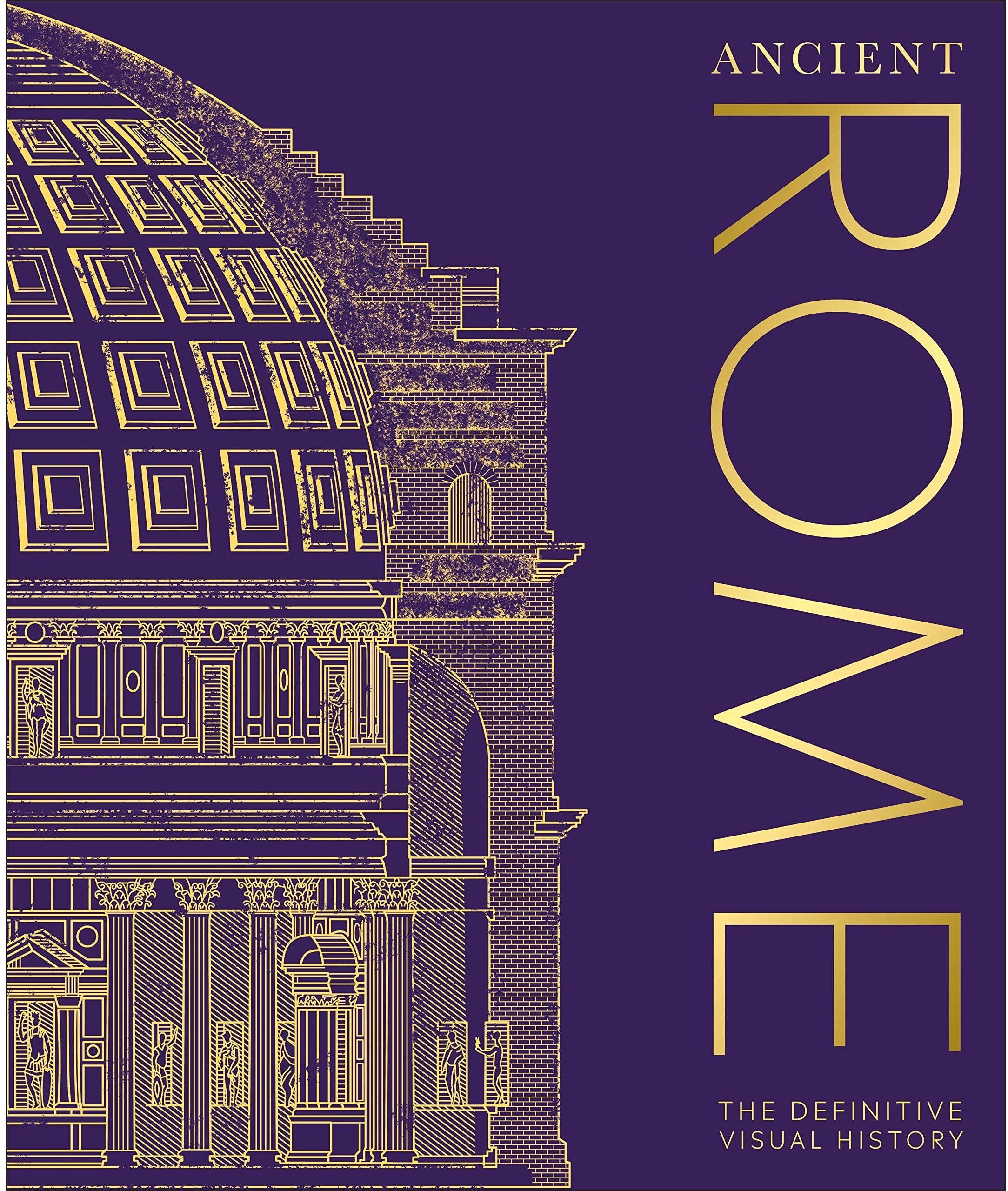
Ancient Rome: The Definitive Visual History (DK Classic History)Immerse yourself in the history of ancient Rome - from its origins as a small settlement on the Palatine Hill to its peak as an empire reigning over 90 million people, and its tumultuous decline. Covering more than 1,000 years of history, and an empire that stretched from Scotland to Syria, Ancient Rome reveals in vivid detail all of the key political, cultural, and military events that shaped the Roman Empire and explores what it was like to live in a society that laid the foundations for many aspects of the modern world. Sumptuous photography and engaging text cover every facet of life in ancient Rome, from art, entertainment, and fashion to engineering, medicine, and war, while detailed maps trace the rise of the mighty Roman Empire. Step back in time in the pages of this history book to discover:- Themed spreads explore developments in areas such as sculpture, religion, warfare, and engineering. - Includes tales of the most dramatic events and battles in Roman history, as well as profiles of influential historical and cultural figures. - An optional 80pp reference section includes sections on rulers, gods and goddesses, and key sites. Featuring Rome's greatest emperors, from Augustus to Constantine, as well as profiles of generals, historians, and influential women, Ancient Rome also delves into the fascinating stories of gladiators, bakers, and enslaved people. The most iconic buildings of Rome are brought to life with specially commissioned CGI recreations, while the stories of ordinary citizens, soldiers, and persecuted groups from across the empire are told with the help of illustrations, artefacts, and eyewitness accounts. Beautifully illustrated and unparalleled in scope, Ancient Rome is the perfect book for anyone who is interested in this defining period of world history.19,95 £*Shipping: 2,99 £Secure redirect to the provider
-
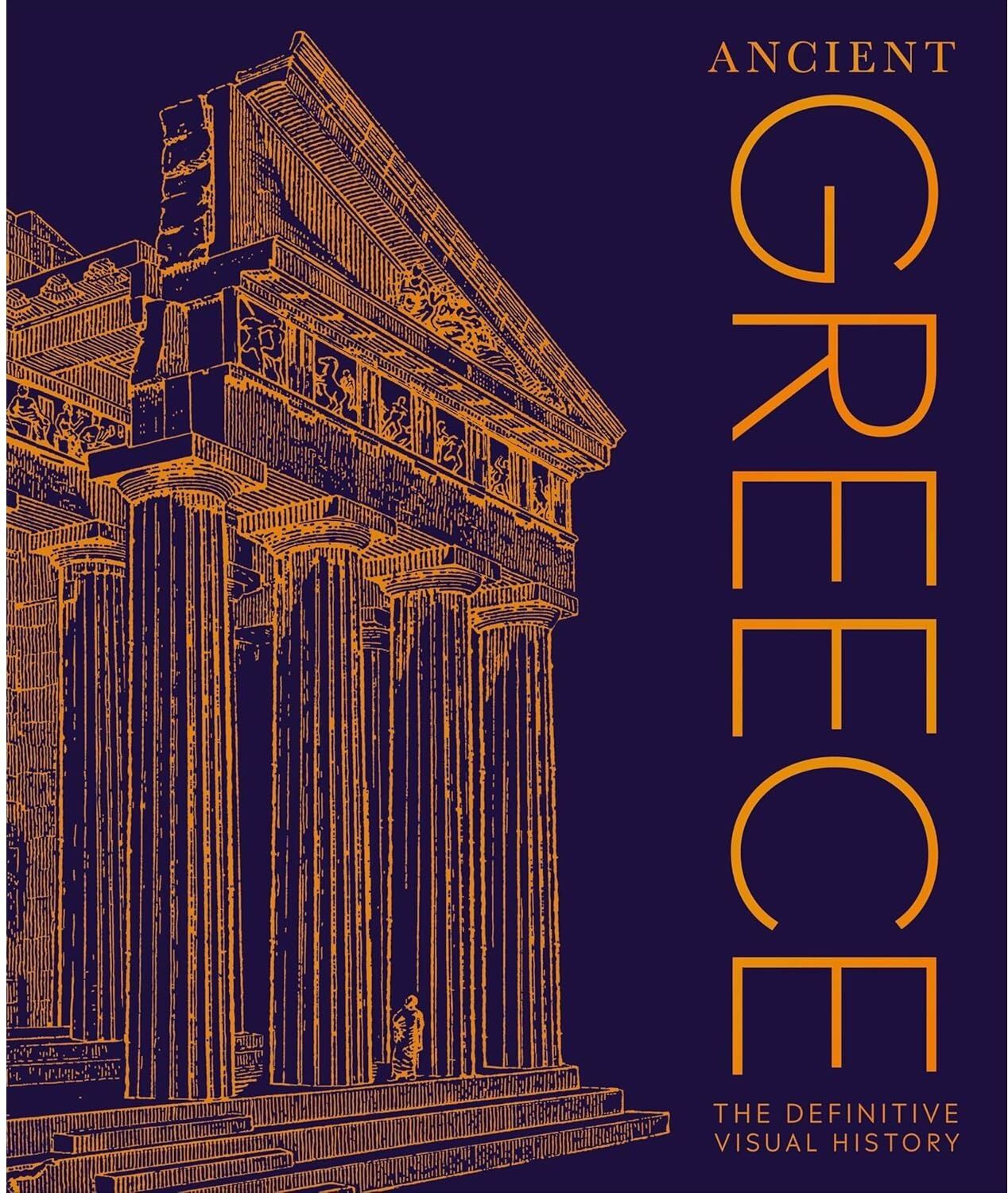
Ancient Greece: The Definitive Visual History (DK Classic History)Embark upon a fascinating journey through ancient Greece – from its rise and fall to its lasting legacy throughout the Western world. Spanning more than 3,000 years, Ancient Greece explores the tumultuous history of this glorious empire in vivid detail – from its Minoan and Mycenaean origins to the apogee of the warring city-states of Athens and Sparta, and from the death of its most charismatic leader, Alexander the Great, to its ultimate defeat by Rome. Sumptuous photography and authoritative, engaging text cover every facet of life in ancient Greece, from art, entertainment, and schools of thought to politics, medicine, and war, while the myths and religious beliefs of the ancient culture are explored and explained in depth. Greece’s military and political power shines through in fascinating maps of its legendary battles. Buried palaces and the Athenian Agora where Plato and Socrates discussed philosophy are brought back to life with stunning CGI artworks. And the stories of everyone from ordinary citizens to lawmakers and the first Olympic athletes are retold through eyewitness accounts and original artefacts.19,99 £*Shipping: 2,99 £Secure redirect to the provider
-
Titan Assassins Creed - The Complete Visual History: The Definitive Visual HistoryThis stunning book explores the rich mythology of Assassins Creed®, featuring the art and history of the series from the first groundbreaking game through the graphic novels to the DLCs. Highlighting the lush and vibrant art that has become a hallmark of the series, this luxury coffee-table book brings the games famous historical locations and figures to life and explores the evolution of each iconic Assassin and Templar.15,99 £*Shipping: 2,99 £Secure redirect to the provider
-
Costway Captain Bucket Seat with Waterproof PVC Leather for Boat Sightseeing-White"Take Your Marine Adventures to the Next Level! Our captain bucket seat measures 23"" x 24"" x 21""(L x W x H) and it can be installed on the boat platform for seating, on the boat swivel, or on a pedestal for captains."232,99 $*Shipping: 0,00 $Secure redirect to the provider


-
What is the difference between the quotient criterion and the difference criterion?
The quotient criterion and the difference criterion are both used to test for convergence or divergence of a series. The quotient criterion involves taking the limit of the ratio of consecutive terms in the series, and if the limit is less than 1, the series converges. The difference criterion involves taking the limit of the difference between consecutive terms in the series, and if the limit is 0, the series converges. In essence, the quotient criterion focuses on the ratio of consecutive terms, while the difference criterion focuses on the difference between consecutive terms. **
-
What is the sterilization criterion?
The sterilization criterion refers to the standard that must be met in order to ensure that a sterilization process has been successful in eliminating all forms of microbial life, including bacteria, viruses, and fungi. This criterion typically involves achieving a certain level of microbial reduction, often measured by a logarithmic reduction factor (e.g. a 6-log reduction for sterilization). Meeting the sterilization criterion is crucial in various industries such as healthcare, pharmaceuticals, and food processing to prevent the spread of infections and ensure product safety. **
-
What is the exclusion criterion?
The exclusion criterion is a predefined set of conditions or characteristics that are used to determine which individuals or subjects should be excluded from a study or analysis. These criteria are established to ensure that the study results are not influenced by certain factors that could skew the findings or introduce bias. By applying exclusion criteria, researchers can maintain the integrity and validity of their study results. **
-
What is the Leibniz criterion?
The Leibniz criterion is a test used to determine the convergence of an alternating series. It states that if the terms of an alternating series decrease in absolute value and approach zero, then the series converges. In other words, if the terms of the series eventually become smaller and smaller, the series will converge. This criterion is named after the German mathematician and philosopher Gottfried Wilhelm Leibniz. **


Is it a mistake to apply the majorant criterion here instead of the minorant criterion?
Yes, it would be a mistake to apply the majorant criterion instead of the minorant criterion in this case. The majorant criterion is used to show convergence, while the minorant criterion is used to show divergence. Since we are trying to show divergence in this case, the minorant criterion would be the appropriate choice. Using the majorant criterion would not provide the necessary information to prove divergence. **
What is the monotonicity criterion 2?
Monotonicity criterion 2 states that if a change in the value of an input variable leads to a change in the value of an output variable in the same direction, then the partial derivative of the output variable with respect to the input variable is non-negative. In other words, if an increase in the input variable results in an increase in the output variable, then the partial derivative is positive. This criterion is used to determine the relationship between input and output variables in mathematical models and functions. **
Top-Angebote
Products related to Criterion:
-
From the Archives: Black History and Culture Value PackThis brand-new series is rooted in a profound commitment to shedding light on some of the important -- and often lesser-known -- aspects of Black history. From the Archives features landmarks, events, people, and artistic endeavors that have played...26,99 $*Shipping: 0,00 $Secure redirect to the provider
-
Orion The Book of Humans by Adam Rutherford – A Brief History of Culture, Sex, War & EvolutionWHAT MAKES US HUMAN? Waging war? Sex for pleasure? Creating art? Mastery of fire? In this thrilling tour of the animal kingdom, Adam Rutherford tells the story of how we became the unique creatures we are today. Illuminated by the latest scientific discoveries, THE BOOK OF HUMANS is a dazzling compendium of what unequivocally fixes us as animals, and reveals how we are extraordinary among them.4,98 £*Shipping: 1,99 £Secure redirect to the provider
-
Ancient Rome: The Definitive Visual History (DK Classic History)Immerse yourself in the history of ancient Rome - from its origins as a small settlement on the Palatine Hill to its peak as an empire reigning over 90 million people, and its tumultuous decline. Covering more than 1,000 years of history, and an empire that stretched from Scotland to Syria, Ancient Rome reveals in vivid detail all of the key political, cultural, and military events that shaped the Roman Empire and explores what it was like to live in a society that laid the foundations for many aspects of the modern world. Sumptuous photography and engaging text cover every facet of life in ancient Rome, from art, entertainment, and fashion to engineering, medicine, and war, while detailed maps trace the rise of the mighty Roman Empire. Step back in time in the pages of this history book to discover:- Themed spreads explore developments in areas such as sculpture, religion, warfare, and engineering. - Includes tales of the most dramatic events and battles in Roman history, as well as profiles of influential historical and cultural figures. - An optional 80pp reference section includes sections on rulers, gods and goddesses, and key sites. Featuring Rome's greatest emperors, from Augustus to Constantine, as well as profiles of generals, historians, and influential women, Ancient Rome also delves into the fascinating stories of gladiators, bakers, and enslaved people. The most iconic buildings of Rome are brought to life with specially commissioned CGI recreations, while the stories of ordinary citizens, soldiers, and persecuted groups from across the empire are told with the help of illustrations, artefacts, and eyewitness accounts. Beautifully illustrated and unparalleled in scope, Ancient Rome is the perfect book for anyone who is interested in this defining period of world history.19,95 £*Shipping: 2,99 £Secure redirect to the provider
-
Ancient Greece: The Definitive Visual History (DK Classic History)Embark upon a fascinating journey through ancient Greece – from its rise and fall to its lasting legacy throughout the Western world. Spanning more than 3,000 years, Ancient Greece explores the tumultuous history of this glorious empire in vivid detail – from its Minoan and Mycenaean origins to the apogee of the warring city-states of Athens and Sparta, and from the death of its most charismatic leader, Alexander the Great, to its ultimate defeat by Rome. Sumptuous photography and authoritative, engaging text cover every facet of life in ancient Greece, from art, entertainment, and schools of thought to politics, medicine, and war, while the myths and religious beliefs of the ancient culture are explored and explained in depth. Greece’s military and political power shines through in fascinating maps of its legendary battles. Buried palaces and the Athenian Agora where Plato and Socrates discussed philosophy are brought back to life with stunning CGI artworks. And the stories of everyone from ordinary citizens to lawmakers and the first Olympic athletes are retold through eyewitness accounts and original artefacts.19,99 £*Shipping: 2,99 £Secure redirect to the provider
-
Which criterion is it, the root criterion or the quotient criterion?
It is the root criterion. This criterion states that if the limit of the absolute value of the terms of a series to the power of 1/n is less than 1, then the series converges. This criterion is used to test the convergence of series with non-negative terms. **
-
What are the Abel's convergence criterion and the Leibniz criterion?
Abel's convergence criterion states that if a series ∑an converges and the sequence {bn} is bounded and monotonically decreasing, then the series ∑anbn also converges. This criterion is useful for determining the convergence of a series when the terms can be factored into two separate sequences. The Leibniz criterion is a test for the convergence of alternating series. It states that if the terms of an alternating series satisfy the conditions of being monotonically decreasing and approaching zero, then the series converges. This criterion is particularly useful for determining the convergence of series with alternating signs. **
-
What is the difference between the quotient criterion and the difference criterion?
The quotient criterion and the difference criterion are both used to test for convergence or divergence of a series. The quotient criterion involves taking the limit of the ratio of consecutive terms in the series, and if the limit is less than 1, the series converges. The difference criterion involves taking the limit of the difference between consecutive terms in the series, and if the limit is 0, the series converges. In essence, the quotient criterion focuses on the ratio of consecutive terms, while the difference criterion focuses on the difference between consecutive terms. **
-
What is the sterilization criterion?
The sterilization criterion refers to the standard that must be met in order to ensure that a sterilization process has been successful in eliminating all forms of microbial life, including bacteria, viruses, and fungi. This criterion typically involves achieving a certain level of microbial reduction, often measured by a logarithmic reduction factor (e.g. a 6-log reduction for sterilization). Meeting the sterilization criterion is crucial in various industries such as healthcare, pharmaceuticals, and food processing to prevent the spread of infections and ensure product safety. **
Similar search terms for Criterion
-
Titan Assassins Creed - The Complete Visual History: The Definitive Visual HistoryThis stunning book explores the rich mythology of Assassins Creed®, featuring the art and history of the series from the first groundbreaking game through the graphic novels to the DLCs. Highlighting the lush and vibrant art that has become a hallmark of the series, this luxury coffee-table book brings the games famous historical locations and figures to life and explores the evolution of each iconic Assassin and Templar.15,99 £*Shipping: 2,99 £Secure redirect to the provider
-
Costway Captain Bucket Seat with Waterproof PVC Leather for Boat Sightseeing-White"Take Your Marine Adventures to the Next Level! Our captain bucket seat measures 23"" x 24"" x 21""(L x W x H) and it can be installed on the boat platform for seating, on the boat swivel, or on a pedestal for captains."232,99 $*Shipping: 0,00 $Secure redirect to the provider
-
Uplifted Goods Optical Precision Pet Claw Architecture Optical Precision Pet Claw ArchitectureEnhance your pet grooming safety with the Optical Precision Pet Claw Architecture. This professional grade grooming solution is engineered with a specialized LED Illumination System designed to provide a definitive view of the delicate internal vein...39,97 $*Shipping: 0,00 $Secure redirect to the provider
-
What is the exclusion criterion?
The exclusion criterion is a predefined set of conditions or characteristics that are used to determine which individuals or subjects should be excluded from a study or analysis. These criteria are established to ensure that the study results are not influenced by certain factors that could skew the findings or introduce bias. By applying exclusion criteria, researchers can maintain the integrity and validity of their study results. **
-
What is the Leibniz criterion?
The Leibniz criterion is a test used to determine the convergence of an alternating series. It states that if the terms of an alternating series decrease in absolute value and approach zero, then the series converges. In other words, if the terms of the series eventually become smaller and smaller, the series will converge. This criterion is named after the German mathematician and philosopher Gottfried Wilhelm Leibniz. **
-
Is it a mistake to apply the majorant criterion here instead of the minorant criterion?
Yes, it would be a mistake to apply the majorant criterion instead of the minorant criterion in this case. The majorant criterion is used to show convergence, while the minorant criterion is used to show divergence. Since we are trying to show divergence in this case, the minorant criterion would be the appropriate choice. Using the majorant criterion would not provide the necessary information to prove divergence. **
-
What is the monotonicity criterion 2?
Monotonicity criterion 2 states that if a change in the value of an input variable leads to a change in the value of an output variable in the same direction, then the partial derivative of the output variable with respect to the input variable is non-negative. In other words, if an increase in the input variable results in an increase in the output variable, then the partial derivative is positive. This criterion is used to determine the relationship between input and output variables in mathematical models and functions. **
* All prices are inclusive of VAT and, if applicable, plus shipping costs. The offer information is based on the details provided by the respective shop and is updated through automated processes. Real-time updates do not occur, so deviations can occur in individual cases. ** Note: Parts of this content were created by AI.